Human-In-The-Loop Industrial AI: Why Human Expertise Still Matters

 Copied



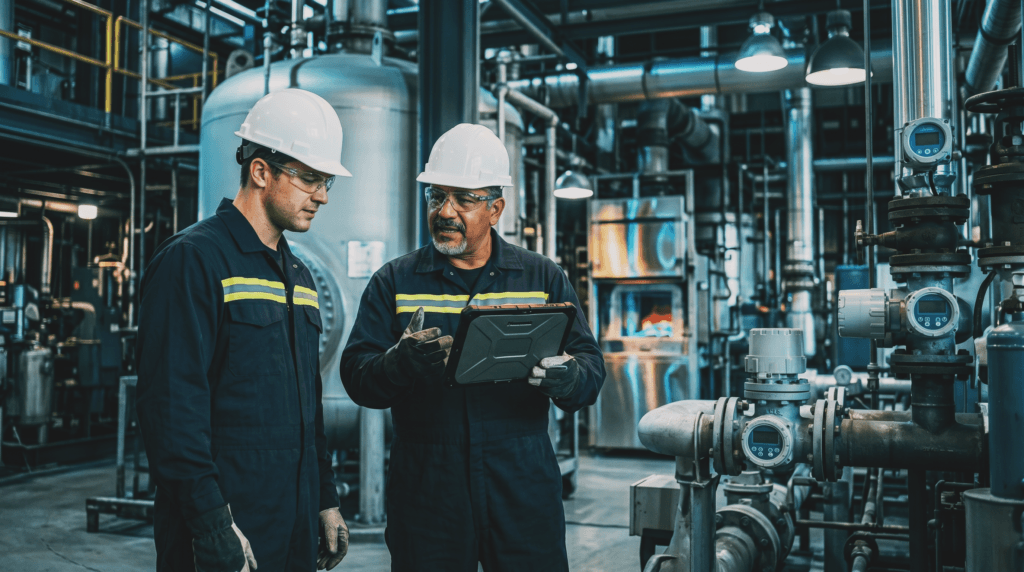
Industrial organizations are gaining access to increasingly capable AI agents and agentic workflows at the same time that experienced engineers, operators, and subject matter experts (SMEs) are retiring and taking decades of operational knowledge with them.
Together, these trends create an opportunity to use AI to extend the value of human expertise. Human-in-the-loop (HITL) AI can help organizations preserve that knowledge by keeping employees actively involved in AI-supported work and capturing the context and reasoning they contribute along the way.
Paired with operational data, that expertise can become available to a broader workforce, helping future teams build on what experienced employees already know rather than starting from scratch.
Organizations that invest now in capturing and scaling human expertise through AI tools can preserve generations of operational knowledge and use it to make faster, better-informed decisions.
Key Takeaways
- Human-in-the-loop AI keeps expert judgment central as AI and agentic workflows take on more industrial work.
- AI amplifies human expertise by pairing its speed and scale with the operational context only experienced engineers, operators, and SMEs can provide.
- Capturing and scaling that expertise helps preserve knowledge through workforce transitions and enables more informed and efficient decision-making across the organization.
What Is Human-in-the-Loop in Industrial Operations?
Human-in-the-loop AI keeps people actively involved in AI-supported analysis, decisions, and actions. In industrial operations, engineers, operators, and SMEs contribute expertise throughout the workflow, from defining relevant operating conditions to reviewing results and deciding when to act.
For example, an engineer monitoring equipment condition might define the normal operating range an AI agent tracks, add context about recent maintenance, and determine when an issue requires human review.
The level of human involvement necessary depends on the workflow and its risk. An agent might compile process data and flag deviations independently while escalating consequential decisions, such as changing operating parameters, to an expert.
As AI agents take on more complex workflows, HITL models keep humans involved at multiple critical decision points instead of limiting human oversight to a final approval step at the end.
Why Is Human Expertise Important When Using Industrial AI?
Human expertise provides the operational context AI needs to support sound decisions. Engineers, operators, and SMEs develop firsthand knowledge of how specific assets and processes behave under different conditions, including factors that may not be evident from data alone.
An AI system, for instance, might flag increased compressor vibration as an anomaly. An experienced engineer may know the unit recently restarted and recognize the pattern from previous startups. AI surfaces the signal, while the engineer determines what it means and whether it requires action.
This is how AI amplifies rather than replaces expertise: the technology can analyze information at scale, while people provide the operational context and judgment needed to turn that analysis into a sound decision.
Nearly nine in 10 engineers already verify AI outputs before relying on them. So if AI is going to truly accelerate their work, experts need quick visibility into the operational data and context behind AI outputs so they can assess the results and decide whether to act.
Organizations also need to retain the analyses, context, and reasoning experts contribute during that process. Capturing this input within HITL AI workflows allows future engineers to draw on how experienced employees approached similar conditions and decisions instead of rebuilding that knowledge from scratch.
How Can Organizations Turn Employee Expertise Into A Long-Term Advantage?
Experienced employees accumulate knowledge that isn’t always documented in procedures or reports. They know why processes behave differently under certain conditions, which signals deserve attention, and which approaches have worked before.
When those employees retire, that context can leave with them. HITL AI creates an opportunity to retain it by capturing the reasoning experts contribute as they analyze AI outputs.
This extends the value of HITL beyond a single interaction. Future employees can draw on the logic behind previous decisions, giving them a stronger starting point when similar problems arise.
Capture the reasoning behind each decision
Procedures and reports often preserve what happened without capturing why an expert chose a particular response. HITL workflows can preserve that reasoning as part of the work itself, connecting an expert’s judgment with the operating conditions they observed, why those conditions mattered, and the resulting outcome.
Future engineers can then review the reasoning and evidence behind an earlier decision, compare it with current conditions, and determine whether the same approach applies. Instead of disappearing after a problem is resolved, expert judgment becomes knowledge others can use.
Translate individual expertise into Decision Capital
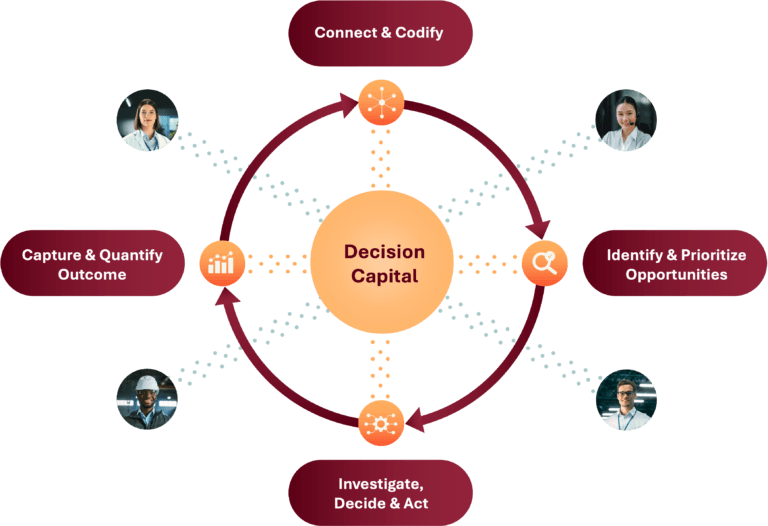
The accumulated, documented knowledge of experienced engineers is what Seeq calls Decision Capital: the operational knowledge, context, analytics, reasoning, and action history an organization accrues over time.
By retaining expertise from investigations and AI-supported decisions, organizations can build knowledge that extends beyond any individual employee. Its value grows as insights are connected across teams, assets, and sites, allowing employees to build on what the organization has already learned.
For example, the analysis behind a recurring equipment failure at one site could help another site’s team recognize and diagnose a similar pattern faster. Each subsequent investigation can add new context, creating a richer foundation for future decisions.
Make collective expertise easy to access and apply
Decision Capital is only useful if employees can put it back to work. Industrial AI can surface relevant analyses, operating context, and previous decisions during new investigations, bringing accumulated expertise into the workflow when it’s needed.
Low/no-code tools and natural-language assistants can also make that knowledge accessible to employees with different levels of data fluency. Agentic workflows can draw on the same context as they complete multistep work, while bringing experts into the loop when judgment or validation is needed.
The result is less time spent searching for information or recreating previous analyses. Engineers can start with what the organization already knows and focus their attention on the decisions where domain expertise adds the most value.
Scale Human Expertise as the Organization Grows
The long-term value of HITL AI comes from capturing the expertise employees contribute and making it available to future teams and AI-supported workflows.
As that knowledge accumulates, employees can approach new problems with the benefit of previous analyses, decisions, and operating context. Sharing that knowledge across teams and sites can also create greater consistency while still allowing engineers to adapt proven approaches to current conditions.
Over time, HITL workflows and Decision Capital reinforce one another: Human expertise informs AI-supported decisions, while each decision adds knowledge that can strengthen the next.
Is your organization equipped to retain expertise as experienced employees retire and AI use grows? Contact us to learn how Seeq can build Decision Capital that scales across teams and sites.